
Korea Steps Forward with UNDP to Transform Sri Lanka’s Waste Sector
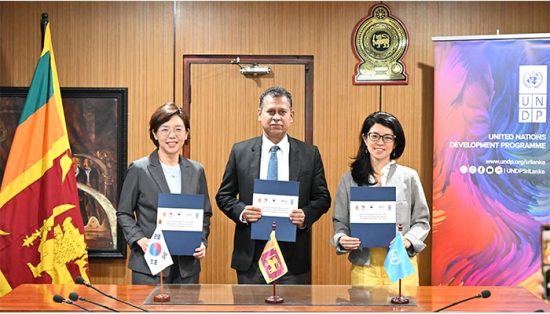
The Republic of Korea, through the Korea Environmental Industry and Technology Institute (KEITI), is partnering with UNDP Sri Lanka to revamp municipal solid waste management with USD 4.7 million in funding. The three-year initiative, “Scale-up and Sustain Low-Carbon Municipal Solid Waste Management and Resource Recovery in Sri Lanka,” will implement sustainable, locally adapted solutions in selected councils across Central and Sabaragamuwa provinces, aiming to cut emissions, promote green jobs, and strengthen community resilience.
Sri Lanka generates over 10,000 tons of municipal solid waste daily, yet only half is collected and a small fraction properly treated, creating environmental, health, and social risks. Past interventions faced challenges including mismatched technologies, financial and institutional constraints, and limited community participation.
The new project focuses on strengthening decentralized waste management systems, piloting innovative technologies such as anaerobic digestion, pyrolysis, and vermicomposting, and promoting behavioural change through waste reduction, segregation at source, and smart collection systems. Gender-responsive approaches, public-private partnerships, and green financing models are integrated to ensure inclusivity and sustainability.
Strategic waste management plans will be developed in four provinces—Northwestern, Central, Sabaragamuwa, and Southern—with demonstration projects in Gampola and Balangoda. Over ten years, the initiative is expected to cut over 269,000 metric tons of carbon dioxide equivalent emissions.
The project also aligns with Sri Lanka’s climate commitments under the Paris Agreement and contributes to multiple Sustainable Development Goals, including sustainable cities, climate action, good health, and decent work.
H.E. Miyon Lee, Ambassador of the Republic of Korea, and UNDP Sri Lanka’s Resident Representative, Azusa Kubota, emphasized the importance of sharing expertise, technology, and resources to build locally grounded, climate-resilient, and socially inclusive waste management systems.