
The Rules That Could Change How Sri Lanka Builds

Sri Lanka has begun work on its first-ever National Building Code, a landmark initiative led by the Ministry of Defence and the National Building Research Institute (NBRI) to strengthen building safety, quality, sustainability and disaster resilience across the country.
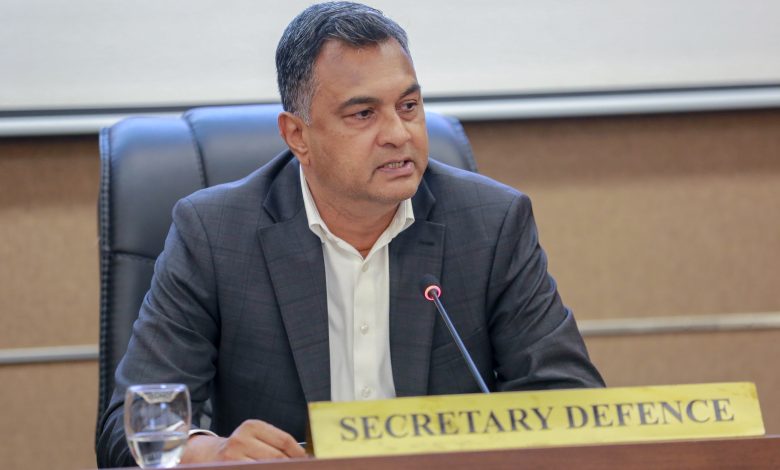
Defence Secretary Air Vice Marshal Sampath Thuyacontha (Retd) chaired a meeting at the Ministry of Defence on 8 October to discuss the initiative, with senior officials from the NBRI, National Planning Department, Urban Development Authority (UDA) and Construction Industry Development Authority (CIDA) participating.
Sri Lanka currently has no single, legally established national building code. Building design and construction rely on a combination of international standards, including the International Building Code (IBC), Eurocodes, British Standards and Indian Standards, alongside local regulations and sector-specific requirements. The selective application of these different standards can lead to inconsistencies in design verification, approvals and enforcement.
The proposed National Building Code of Sri Lanka (NBCSL) aims to bring these requirements together under one national framework, adapted to the country’s own conditions and aligned with internationally recognised best practices.
The initiative is particularly important given Sri Lanka’s exposure to floods, landslides, high winds and other natural hazards, as well as its varied climatic, geological and environmental conditions. A nationally applicable code is expected to provide a consistent basis for safer building design, construction, maintenance and regulatory oversight.
The proposed code will cover ten key technical areas, including structural safety, fire safety, sustainability and universal accessibility. It will also establish practical procedures for building permits, inspections, compliance and enforcement.
The initiative has two main objectives: to consolidate the country’s fragmented building regulations into a unified national framework and to establish the institutional arrangements needed to apply the code consistently throughout Sri Lanka. These arrangements will include clearly defined responsibilities for relevant institutions, approval procedures, inspection mechanisms and capacity-building programmes for regulators and construction industry professionals.
The formulation process will involve consultations with government institutions, professional bodies, academia, the construction industry and the public to ensure that the code is technically sound, relevant to Sri Lanka and practical to implement.
The project proposal submitted by the NBRI to the National Planning Department was approved for implementation during 2026–2028. Cabinet approval was granted on 21 October 2025, based on a memorandum submitted by the President in his capacity as Minister of Defence.
The project will be jointly managed by the NBRI, CIDA and UDA, in consultation with relevant stakeholders. A qualified consultancy firm will be selected through a competitive procurement process in accordance with National Procurement Agency guidelines.
The assignment is expected to take 24 months, culminating in the preparation and gazetting of the National Building Code of Sri Lanka. Funding will be provided through the Government’s Consolidated Fund.
“This initiative reflects the Government’s firm commitment to protecting lives and property through modern, science-based construction standards. A national building code is long overdue, and its development marks a significant step towards a safer and more resilient Sri Lanka,” the Ministry stated.
The Ministry of Defence and the NBRI have called for Expressions of Interest (EOI) from qualified consultancy firms to undertake this nationally significant assignment.