
Colonel Nalin Herath’s New Assignment: Keeping War at Bay
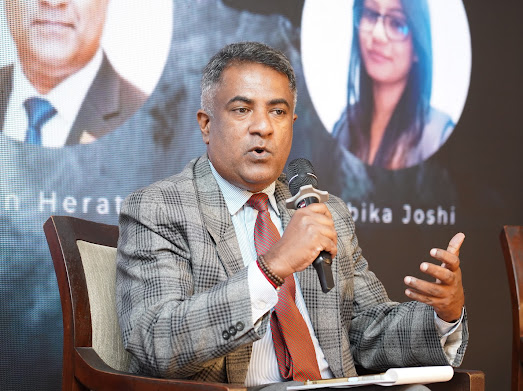
Colonel Nalin Herath has taken on an international responsibility that places his experience in defence and security in a setting where the central concern is not how to fight a war, but how to prevent one.
He has been appointed a member of the Global Governing Council on War Affairs of the World Peace Board (WPB), an international organisation working towards conflict prevention and world peace.
The appointment was formally confirmed by the organisation.
Herath brings decades of experience covering defence, national security, human rights, maritime affairs and strategic cooperation. His professional career has included senior roles in Sri Lanka’s defence and national security sectors.
He served as Media Director and Media Spokesperson of the Ministry of Defence and later held the position of Director General at the Institute of National Security Studies (INSS).
His work has also developed strongly around maritime affairs and regional cooperation. He is currently Secretary General of the Ceylon Chamber of Shipping, a Non-Executive Member of the London Dialogue in the United Kingdom and Executive Director of the South Asian Sustainability and Security Research Institute (SASSRI).
The World Peace Board says its Council on Military Affairs draws on the knowledge of security professionals to contribute to the prevention of conflict. Despite its title, the council is not intended as a body for preparing for war.
That makes Herath’s background particularly relevant to its work. His experience in defence and national security is now being brought into discussions where dialogue, human security and conflict prevention are given priority.
The appointment also has relevance for Sri Lanka and the wider Indian Ocean region. Maritime security, regional stability and the safety of international trade routes have become closely connected issues, making professional experience in both security and maritime affairs particularly significant.
Herath’s career has given him experience across these areas, from national defence and security institutions to the maritime sector and regional research.
His new role therefore brings together different parts of that professional experience in an international setting devoted to one of the most difficult challenges in security affairs — preventing disputes from becoming conflicts and conflicts from becoming wars.
For a professional whose career has been closely associated with security, this is a different kind of assignment: using that experience in a forum where the ultimate objective is to keep war at bay.