
A Plan on Paper Meets the People Who Must Deliver It
Sri Lanka’s National Export Development Plan (NEDP) 2026–2030 has moved into its implementation phase, bringing together the government agencies responsible for turning the five-year export strategy into action.
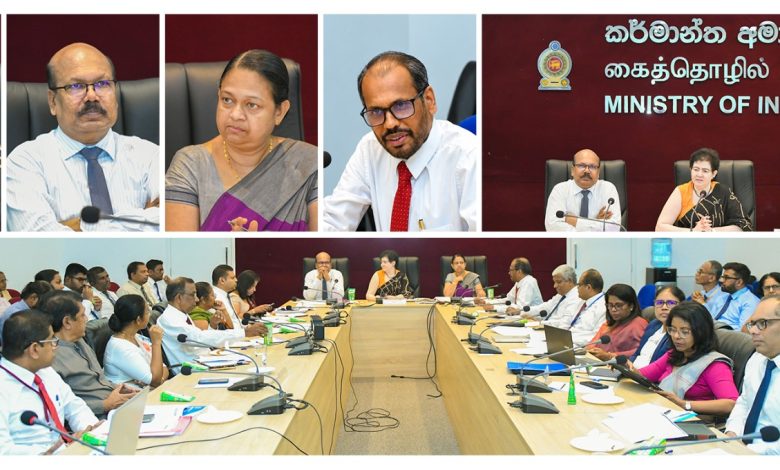
The Sri Lanka Export Development Board (EDB), in collaboration with the Ministry of Industry and Entrepreneurship Development, convened a coordination meeting on 29 September 2026 at the Ministry’s Auditorium, bringing together representatives of the Lead Implementing Agencies involved in the NEDP.
The meeting focused on strengthening coordination between government institutions and ensuring that the activities assigned under the plan are carried out effectively and on time.
The Secretary of the Ministry of Industry and Entrepreneurship Development, in opening remarks, stressed the importance of coordinated action among government institutions in translating the national export development agenda into tangible results.
The Chairman and Chief Executive Officer of the EDB delivered a presentation on the NEDP 2026–2030, outlining its strategic direction, key objectives, priority sectors and implementation framework. The presentation also explained the roles and responsibilities of the Lead Implementing Agencies in taking forward the initiatives under the plan.
The NEDP provides a national framework for strengthening Sri Lanka’s export competitiveness, diversifying products and markets, improving trade facilitation and logistics, expanding access to trade finance and investment, strengthening quality and standards, and encouraging innovation, skills development and sustainable export growth.
At the centre of the plan is an ambitious target: increasing Sri Lanka’s combined merchandise and services exports to approximately US$36 billion by 2030.
Reaching that figure will require coordinated work across government institutions, the private sector and other stakeholders. The meeting therefore placed particular attention on institutional coordination, clear accountability and the timely implementation of activities.
Lead Implementing Agencies were requested to nominate focal points to facilitate communication and coordination on NEDP activities. Participants were also encouraged to identify implementation bottlenecks and develop practical solutions to speed up work under the plan.
The meeting provided an opportunity for agencies to review their implementation priorities, clarify institutional responsibilities and identify areas where greater coordination or support may be required.
Guidelines approved by the Secretary of the Ministry of Industry and Entrepreneurship Development, in line with the relevant Cabinet decision, were also circulated among the Lead Implementing Agencies to guide implementation of the NEDP 2026–2030.
The meeting marked a move from planning to practical implementation, bringing the institutions responsible for different parts of Sri Lanka’s export strategy around the same table.
With five years to work towards the US$36 billion export target, the success of the NEDP will depend not only on the strategy itself, but on how effectively the agencies responsible for delivering it work together.